 BTS MIAMI WIKI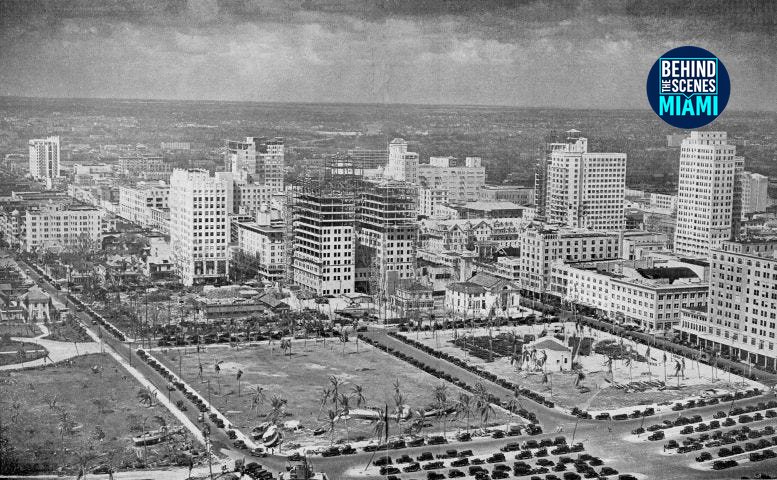
How Miami Was Made
Miami was not built: it was re-built, again and again. The 1920s land boom, the postwar resort era, the Cuban exile's rebuilding, the 1980s excess, the art-led rebirth: each wave buried the last and raised a new city on top. 'The Magic City' is not a nickname; it is a description of the process.
We tell it as one story with many chapters: because Miami only makes sense as a serial reinvention.
The booms
The 1920s land boom built the Mediterranean Revival city, Coral Gables, the Art Deco district, on speculation and sunshine. The bust came in 1926, with a hurricane for punctuation. Miami rebuilt.
After World War II, the resort era made Miami Beach America's winter playground. Then came 1959: the Cuban exile arrived, and the city's economy, politics and culture were rebuilt a third time: the deepest remaking of all.
The waves
The 1980s brought the Mariel boatlift, the cocaine economy's violence, and then the cameras: Miami Vice broadcast a neon city to the planet. The 1990s and 2000s brought the Latin American capital wave, the condo towers, and finally the cultural wave, Art Basel (2002), Wynwood Walls (2009), that made Miami a cultural capital, not just a playground.
Each wave's people became the next wave's old guard. That is the Miami cycle.
The vibe
The made-city feeling is everywhere: the Deco hotels saved from demolition, the exile stories in the first person, the murals painted over last year's murals. Miami wears its remakes proudly: the seams show, and the seams are the style.
No other American city has reinvented itself this many times. The next reinvention is already being painted.
What to experience
HistoryMiami Museum, the Wynwood transformation, Origins of Miami, and the Stories hub for the chapters.
Sources & references
See also
Reviews (0 reviews)
No reviews yet. Be the first to review this place.