 BTS MIAMI WIKI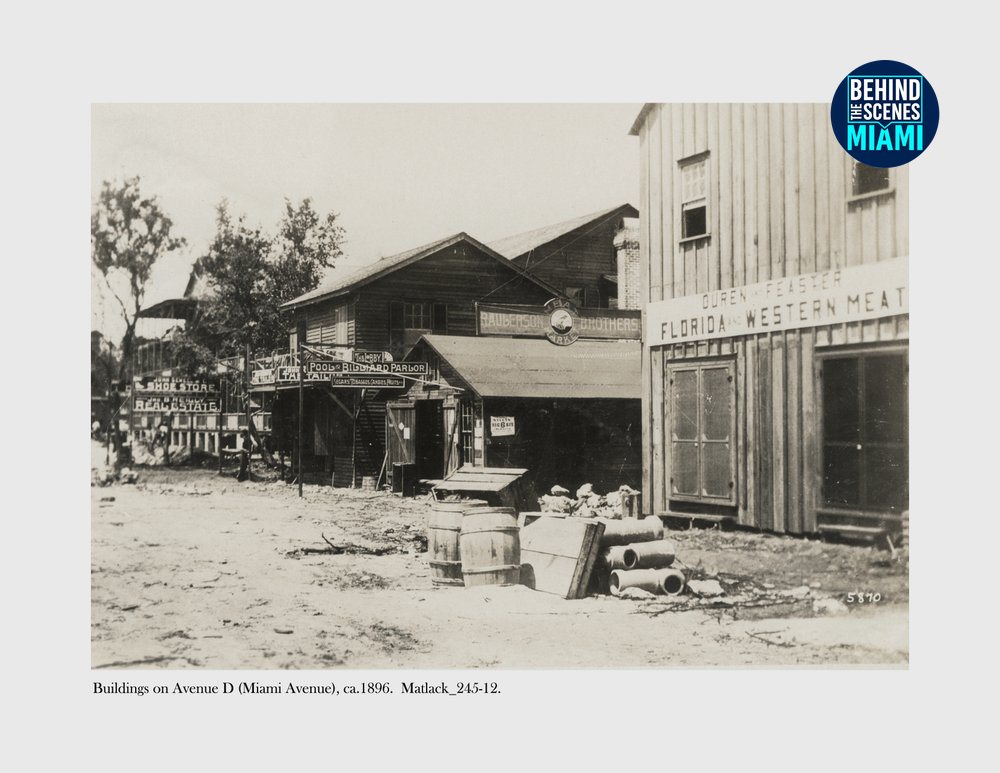
Origins of Miami
Miami began with a deal: Julia Tuttle, the 'Mother of Miami,' offered land to railroad magnate Henry Flagler if he would extend his railway to the bay. He did, and in 1896, Miami was incorporated as a city. It is the only major American city founded by a woman.
We start every Miami story here: with Tuttle's vision, Flagler's steel, and a frontier town that refused to stay small.
Before the city
Long before the railroad, the Tequesta lived around the mouth of the Miami River: the river still carries their world in its name. Spanish missions came and went; in the 1830s–40s, Fort Dallas stood on the river's north bank during the Seminole Wars.
The frontier settlement was tiny: a trading post, a few dozen souls, and some of the richest farmland in Florida.
Tuttle and Flagler
Julia Tuttle arrived from Cleveland in the 1890s, bought hundreds of acres on the north bank, and saw a city where others saw swamp. After the freeze of 1894–95 devastated central Florida, while her Miami groves survived, she convinced Henry Flagler to extend his railroad south.
The deal: her land for his railway, plus the hotel that became the Royal Palm. In July 1896, Miami was incorporated: with Tuttle as the only woman founder of a major American city.
The vibe
The origin story sets Miami's character: a city willed into existence by persuasion and ambition, not by slow growth. Everything since, the booms, the reinventions, the sheer improbability of the place, rhymes with that first deal.
HistoryMiami Museum keeps the artifacts; the river keeps the memory.
What to experience
The Miami River's historic banks, HistoryMiami Museum in Downtown, and How Miami Was Made for what happened next.
Sources & references
See also
Reviews (0 reviews)
No reviews yet. Be the first to review this place.