 BTS MIAMI WIKI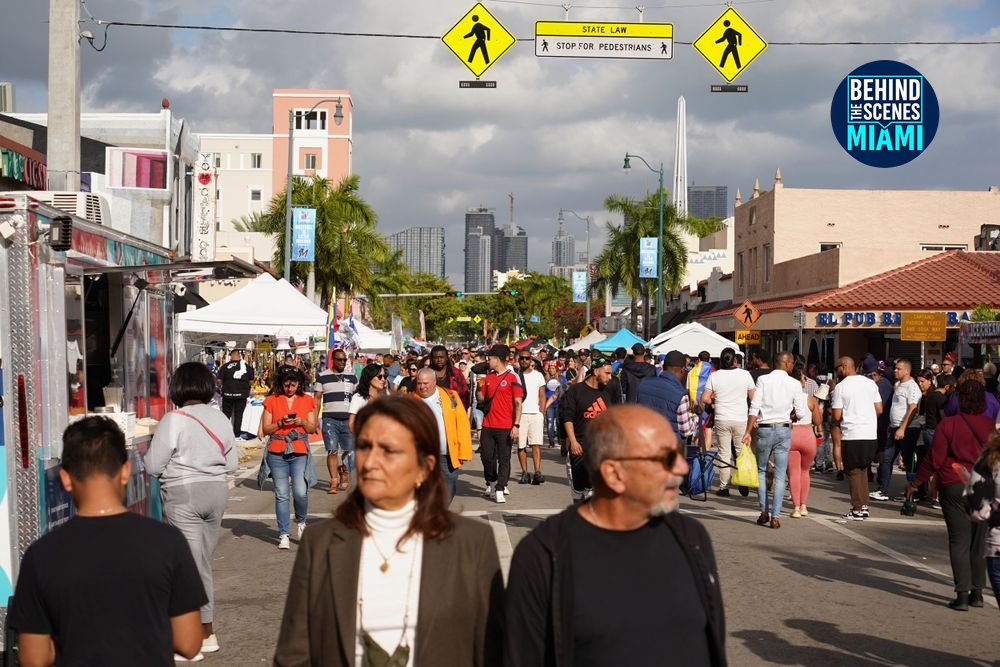
Miami's People: A Demographic Portrait
Miami's demographics are its destiny: a majority-Hispanic city where Spanish is the street's first language, layered with Caribbean, South American and global communities that make Miami-Dade one of the most international counties in the United States. The census counts it; the streets prove it.
We describe the portrait qualitatively and carefully: diversity you can verify by walking, not just by numbers.
The big picture
Miami is the most Hispanic major city in the United States by share of population: a fact visible on every commercial street. The Cuban community built the foundation; Venezuelan, Colombian, Nicaraguan, Dominican, Haitian, Brazilian, Argentine and many other communities layered on top.
The result is not a melting pot but a mosaic: communities distinct, side by side, in constant exchange.
A city of arrivals
Every generation of Miami has been defined by who just arrived: the early exiles, the Mariel generation, the 1980s and 90s waves, the 2000s South Americans, the 2010s Venezuelans, the 2020s tech migrants. The city's demography is a moving picture, and its culture is the sum of the layers.
The Communities hub tells each layer's story in full.
The vibe
Demography in Miami is not statistics; it is the soundtrack: Spanish first, then English, Portuguese, Creole, all in one elevator ride. It is the ballot, the menu, the radio dial: the city negotiating its identity in real time, out loud.
No American city looks less like the old America, or more like the next one.
What to experience
The Communities: Cuban, Venezuelan, Colombian, Haitian, Brazilian, Argentine, Nicaraguan, Dominican, and the languages of Miami.
See also
Reviews (0 reviews)
No reviews yet. Be the first to review this place.