 BTS MIAMI WIKI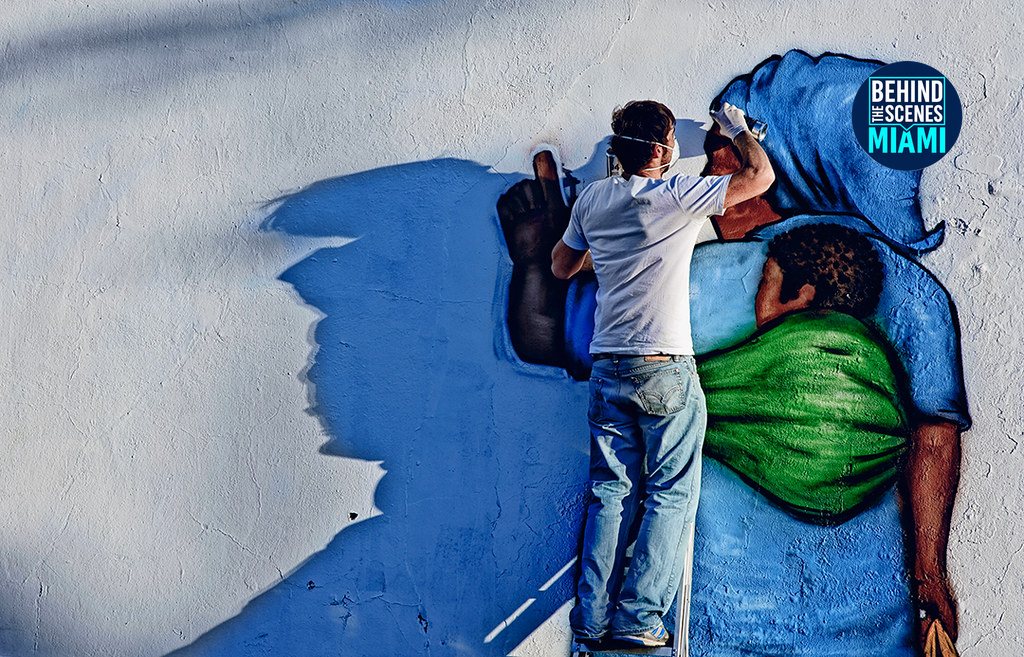
The Muralist Movement
The muralist movement is Miami's most visible art form: the painters, local and international, who covered Wynwood, Little Havana, Little Haiti and beyond in large-scale murals. What started as street art became the city's signature visual language, and then its economic engine.
We follow the paint, not just the paintings: the movement is people on lifts at dawn, repainting the city every year.
The story
Street art arrived in Miami with the graffiti writers of the 1980s, but the muralist era began in the 2000s, when property owners in Wynwood started inviting artists to paint legally, and at scale. Wynwood Walls (2009) gave the movement an institutional anchor; the surrounding blocks gave it infinite canvas.
The model spread: Little Haiti painted its heroes, Little Havana its history, the Design District commissioned site-specific works. Miami learned that a painted wall is an asset, not a liability.
The vibe
The movement lives in the repainting: murals fade, get tagged, get buffed, get reborn: the city as a palimpsest. During Miami Art Week, artists paint live while crowds watch; the rest of the year, you catch them on lifts, headphones on, at 7 in the morning.
It is democratic art: no ticket, no door, no permission needed to stand in front of it. That is the whole point.
What to experience
Walk Wynwood's mural corridors, look for the big walls in Little Haiti and Little Havana, and visit during Miami Art Week to watch murals being born. The transformation of Wynwood shows what the paint did to the district.
Official site: wynwoodwalls.com
Sources & references
See also
Reviews (0 reviews)
No reviews yet. Be the first to review this place.